Lipoma removal in Paris 8 — Dr. Stroumza-Escoffier
A lipoma is a benign tumor made up of fat cells. While generally harmless, it can become bothersome or unsightly. In these cases, surgical excision is recommended for its complete removal.
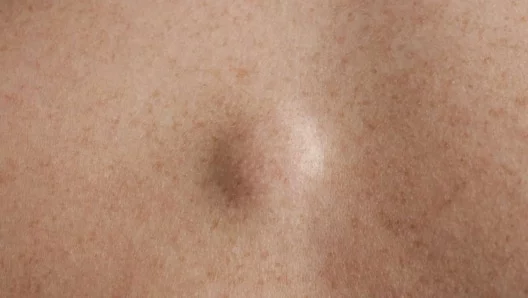
Table of contents
What is a lipoma?
A lipoma is a soft, mobile mass located under the skin, in the fatty tissue. It can appear in various places on the body: back, shoulders, arms, thighs, abdomen, etc.
Features:
Slow growth
Often painless
Variable size (from a few millimeters to several centimeters)
One or more possible lipomas on the same patient
Types of benign lipomas:
Encapsulated lipome
Diffuse lipoma
Adenolipomatosis (multiple lipomas)
Removal is considered in cases of aesthetic discomfort, pain or significant volume (often > 5 cm).
How does the intervention take place?
Treatment is based on complete surgical excision to prevent any recurrence.
For small lipomas:
Performed under local anesthesia
Rapid intervention, in office or clinic
Absorbable threads for skin closure
For large lipomas (> 5 cm):
Preliminary imaging consultation (MRI)
Sometimes performed under general anesthesia on an outpatient basis
Biopsy possible if there is diagnostic uncertainty
The sample is systematically sent for histopathological analysis.
Is the procedure painful?
A lipoma is generally painless , as is its removal. Moderate discomfort may be felt during the healing phase, but this is usually well controlled with simple pain relievers.
Does the removal leave a scar?
Yes, as with any skin surgery. However, the incisions are discreet and the surgeon takes care to minimize the aesthetic impact.
Is it always necessary to remove a lipoma?
Not necessarily. Withdrawal is only indicated in these cases:
Pain or functional impairment
Rapid growth or suspicious appearance
Aesthetic damage
Family history of lipomatosis
In the absence of discomfort or abnormality, simple regular medical monitoring may suffice.
Risk of recurrence or multiple lipomas
Complete excision significantly reduces the risk of local recurrence. However, some patients may have a genetic predisposition to developing multiple lipomas (lipomatosis). In such cases, dermatological follow-up is recommended.
The price of lipoma surgery
Reimbursement: Excision is covered by Health Insurance if medically justified: pain, discomfort, or suspected change in appearance. Purely cosmetic procedures are not reimbursed.
FAQ
Why do lipomas develop?
The origin is often genetic , but other factors (hormonal, local trauma) can also play a role.
What are the signs of a lipoma?
A soft, mobile, painless mass located under the skin, with slow growth.
Is a lipoma dangerous?
No. It's a benign tumor. If there's any doubt (rapid growth, pain), diagnosis by imaging and biopsy is recommended.
Can it be removed by oneself?
Absolutely not. Removal must be surgical and performed in a medical setting to avoid infection or recurrence.
Can a lipoma recur?
Yes, if it is not completely removed. Some patients also develop other lipomas over time.
Does withdrawal leave any lasting effects?
Generally not. A discreet scar remains, well controlled by post-operative care.

This article is for informational purposes only and does not replace a medical consultation.
The different types of dermatological surgery
A wide range of skin conditions can be treated surgically. The type of procedure always depends on the nature and severity of the lesion.