Resumption of scars
Some scars are discreet and well-tolerated. Others, however, can be unsightly , painful, or a source of functional impairment. Reconstructive dermatological surgery can improve their appearance or make them less visible.
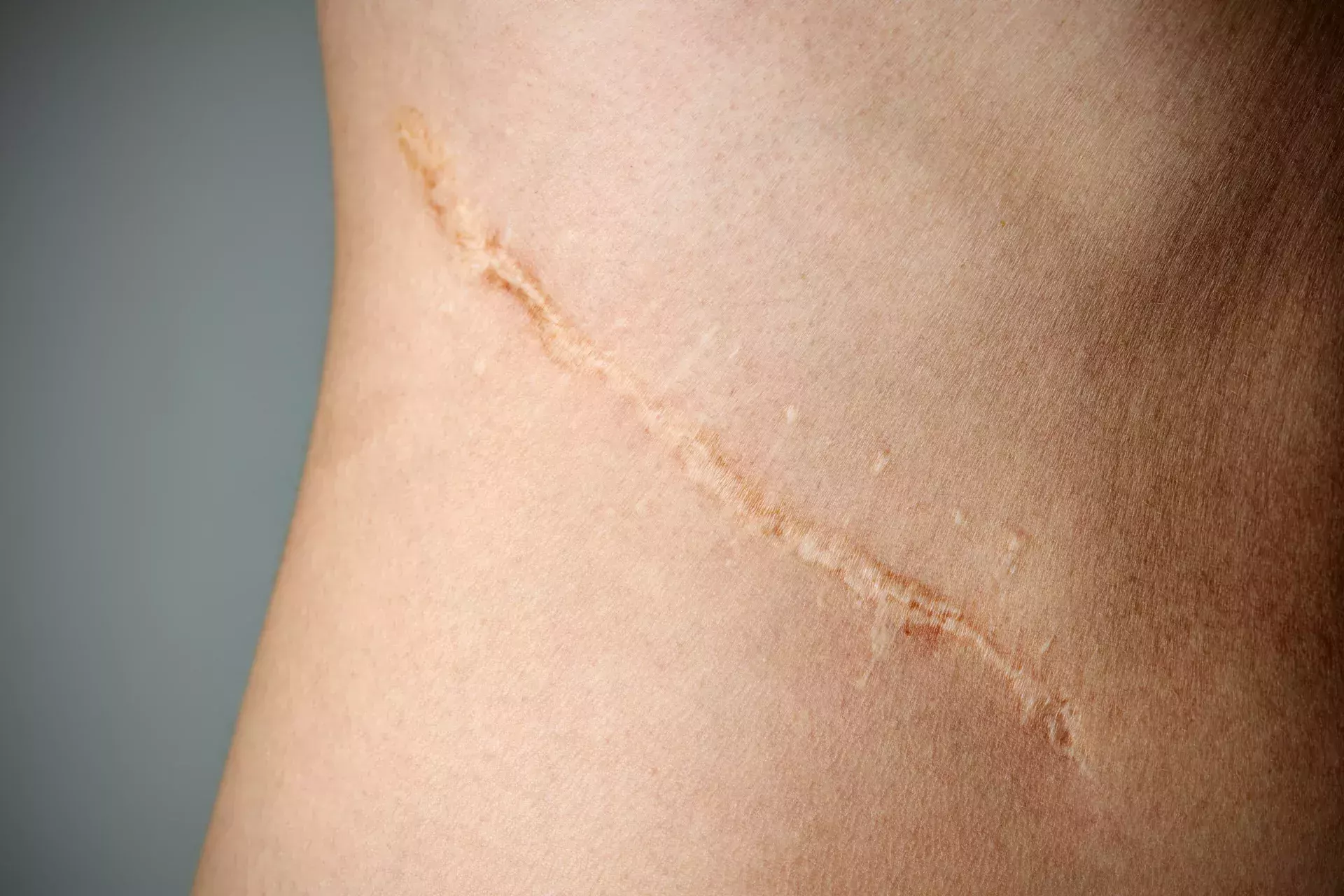
Table of contents
The different types of scars
A scar is the natural result of the skin's healing process after an injury or procedure. It can take several forms:
Retractable scar
It pulls on the surrounding tissues, creating visible tension. It can restrict movement or be unsightly.
Ulcerated scar
Fragile and often painful, it deepens over time. It remains difficult to close without specific intervention.
Hypertrophic or keloid scar
Thick, red, sometimes painful, it extends beyond the initial area of the injury. Common in certain areas (chest, shoulders), it is often difficult to treat.
How to surgically revise a scar
The goal of revision surgery is twofold: to improve the aesthetic appearance and/or restore function . Several techniques are possible depending on the location, shape, and nature of the scar:
Simple excision followed by a new suture
Skin grafting if the tissue loss is significant
Local flap : relocation of surrounding tissues to cover the scar
Skin expansion : progressive dilation of the skin
Micro-lipostructure : fat injection to reshape and soften the area
Scar revision or cosmetic treatment?
Surgical revision differs from cosmetic treatments such as lasers, peels, or injections. These latter treatments reduce the visible appearance but do not correct the underlying structure of the scar.
👉 The dermatological surgeon is the only one authorized to perform an excision or reconstruction of tissues.
When should scar revision be considered?
A resumption of normal operations may be recommended:
If the scar hinders movement
In case of persistent pain
If it progresses badly (keloid, ulcer)
To correct a significant aesthetic flaw
Following post-surgical complications
The diagnosis is made during a specialist consultation , with a suitable treatment plan.
Cost of scar revision
The price depends on the technique used, the complexity and the area concerned.
Coverage: Health insurance does not cover cosmetic revisions. Coverage may be considered if the scar interferes with bodily function or is the result of an accident.
FAQ
Can a scar disappear completely?
No, but its appearance can be significantly improved by surgery or appropriate treatment.
Is it painful?
The procedures are performed under local anesthesia. Post-operative pain is moderate and well managed.
What is the best time to correct a scar?
It is recommended to wait 6 to 12 months after scar formation to assess its stability before considering a revision.
Is the procedure reimbursed?
Laser treatment can reduce some scars (redness, texture), but it does not replace surgery in cases of retraction or loss of substance.
Are the procedures reimbursed?
Yes, if the scar has a functional impact or results from an accident or covered surgery. Otherwise, it is considered cosmetic.
This article is for informational purposes only and does not replace a medical consultation.
The different types of dermatological surgery
A wide range of skin conditions can be treated surgically. The type of procedure always depends on the nature and severity of the lesion.