Skin carcinoma: surgical treatment in Paris 8
Cutaneous carcinomas are the most common type of skin cancer. They form in the epidermis and are strongly linked to prolonged exposure to UV rays . When detected early, they can be effectively treated with dermatological surgery.
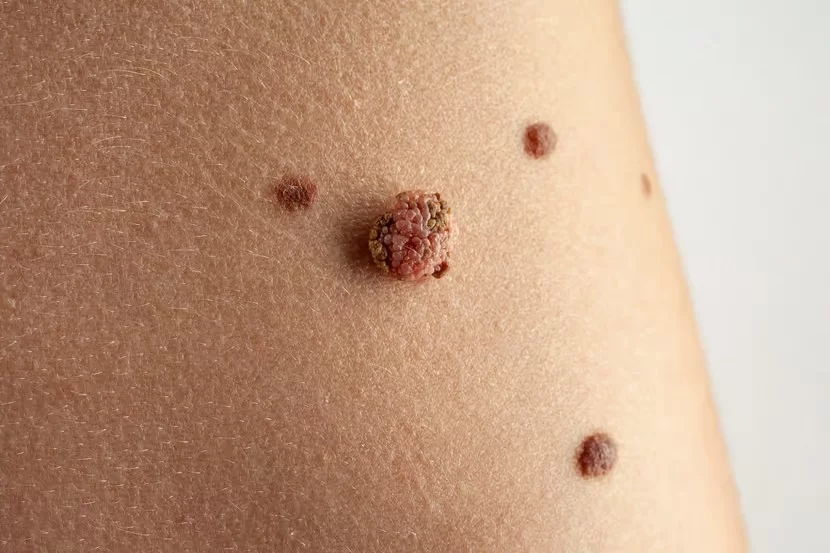
Table of contents
The different types of skin carcinoma
There are two main forms of cutaneous carcinoma:
Basal cell carcinoma : the most common, slow-growing, rarely metastatic.
Squamous cell carcinoma (or spinocellular carcinoma): more aggressive, which can evolve into invasive forms.
Other, less frequent forms exist, such as mucosal or breast carcinomas.
What is a cutaneous carcinoma?
Carcinoma is a malignant tumor that develops from the superficial cells of the skin. It more often affects people with fair skin who are exposed to intense or repeated sun exposure.
Basal cell carcinoma
It originates in the basal cells, often on the face, neck, or upper body. It manifests as:
A small pearly plaque
A persistent crust
A wound that does not heal
Squamous cell carcinoma
Originating from keratinocytes, it develops more rapidly and can form:
A scabby wound
An infiltrating tumor
A painful or bleeding area
Who is affected by skin carcinoma?
The main risk factors include:
Fair skin (phototype I to III)
Sun exposure from childhood
Regular use of UV tanning beds
Family or personal history
Immunosuppression (transplant, HIV)
Some genetic diseases
How to recognize a skin carcinoma?
The most frequent warning signs:
Red patch or persistent crust
A bubble that won't heal
Progressive lesion
Spontaneous bleeding
The ABCDE rule can help with screening:
A is for Asymmetry
B is for Irregular Edges
C is for Color Changing
D stands for Diameter > 6 mm
E is for Evolution
A dermatologist can confirm the diagnosis through a clinical examination, sometimes supplemented by a biopsy.
Carcinoma surgery: what is the process?
Treatment involves complete surgical excision of the lesion with a safety margin of 3 to 10 mm. The area is then closed.
by direct suturing
by skin grafting,
or by local patch depending on the location and size.
The procedure is performed under local anesthesia on an outpatient basis. The results are very satisfactory if the cancer is treated early.
Post-operative follow-up
After the removal of a carcinoma, regular dermatological follow-up is essential:
Monitoring wound healing
Relapse detection
Prevention of new lesions (photoprotection, annual check-ups)
A histological report is systematically provided to confirm complete excision.
Carcinoma and health insurance
Surgical treatment of carcinomas is fully covered by health insurance, provided it is prescribed by a doctor. Additional coverage may be necessary in cases of advanced reconstruction.
Prices
Here are the fees charged for the main dermatological surgery procedures. The amount may vary depending on the complexity of the surgical procedure. A personalized quote is provided after the initial consultation.
FAQ
What are the symptoms of carcinoma?
Rough patches, crusty lesions, small red or pearly bumps that persist or bleed.
Is it a serious cancer?
Carcinoma is rarely fatal if treated promptly. Squamous cell carcinoma is more aggressive and can progress.
Can carcinoma be prevented?
Yes. Avoid artificial UV rays, apply sunscreen, wear protective clothing, and have your skin checked regularly.
Does the treatment leave a scar?
Yes, but it is usually discreet. Appropriate care allows for good healing.
Is it refundable?
Yes, Health Insurance covers carcinoma treatments with a medical prescription.
This article is for informational purposes only and does not replace a medical consultation.
The different types of dermatological surgery
A wide range of skin conditions can be treated surgically. The type of procedure always depends on the nature and severity of the lesion.