Skin tag removal in Paris 8 — Dr. Stroumza-Escoffier
Skin tags or molluscum pendulum: are they dangerous, should they be removed, how is the removal done and what does Health Insurance reimburse?
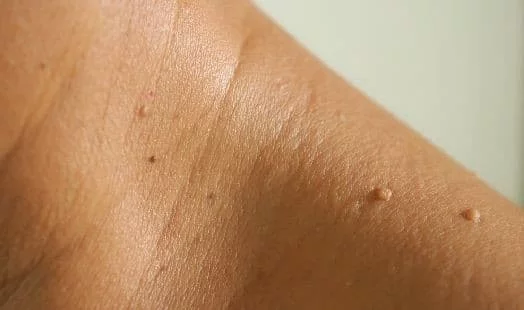
Table of contents
Medically reviewed by Dr. Nathaniel Stroumza-Escoffier , plastic surgeon in Paris 8th arrondissement.
RPPS 10100674943 — Page published on May 15, 2025, updated on October 8, 2026.
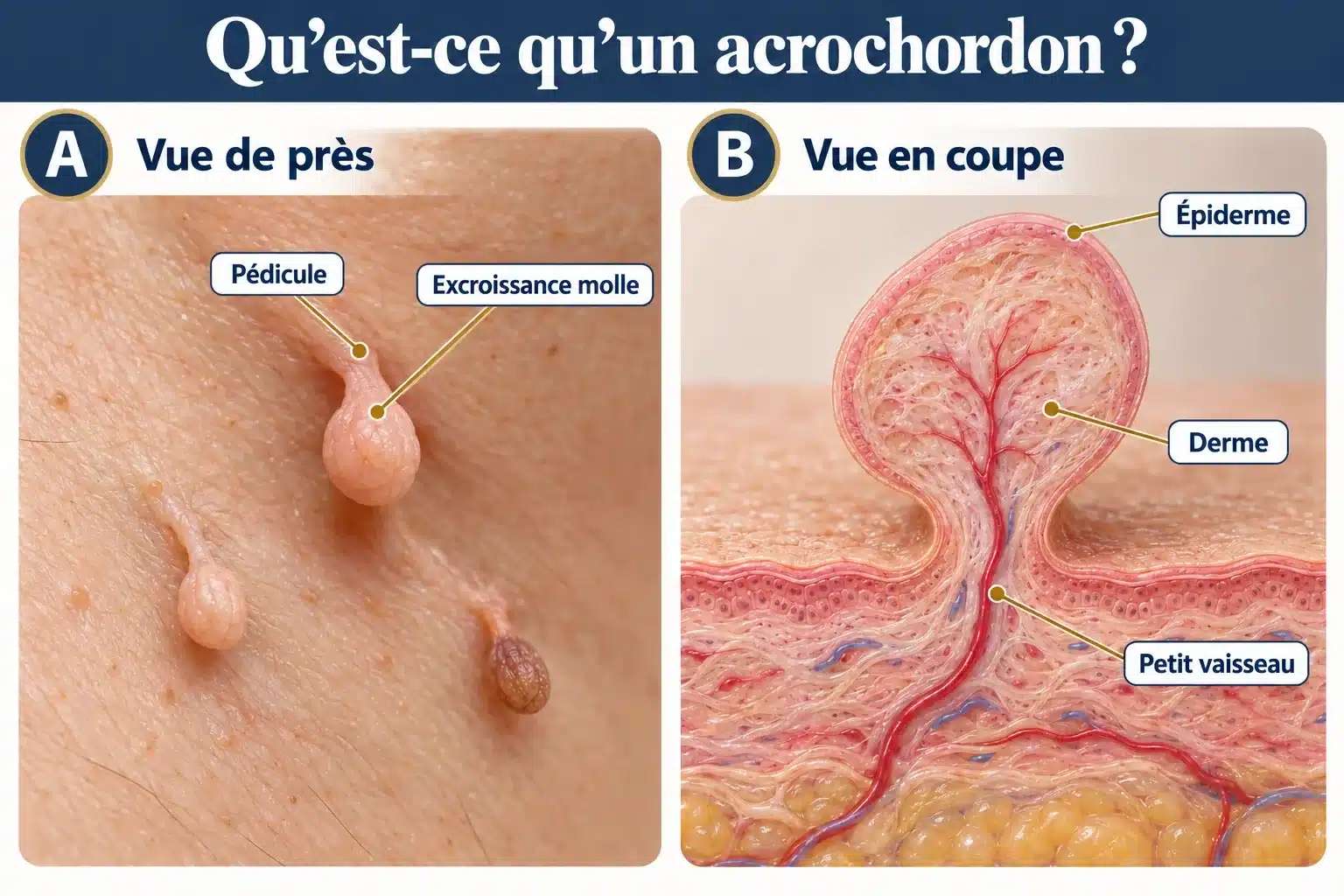
A skin tag, also called a molluscum pendulum, soft fibroma, or fibroepithelial polyp, is a small, soft, benign growth attached to the skin by a thin stalk [ 1 ] . Very common, it is most often found in skin folds: neck, armpits, groin [ 1 ] . This page first answers patients' questions: is it dangerous, should it be removed, who can do it, how, at what cost, and with what reimbursement? It then describes the treatment at the dermatological surgery center in the 8th arrondissement of Paris.
Short answer
A skin tag is a benign lesion. While there is a risk of mistaking it for a serious condition, it is very low: of 1,335 lesions sent to the laboratory with a diagnosis of skin tag, only 5 were malignant tumors [ 2 ] . Removal is not mandatory: it is done if it is bothersome, sticks, irritates, is painful, or if there is doubt about the diagnosis [ 1 , 3 ] . The diagnosis is based on a medical examination: your general practitioner or a dermatologist can make the diagnosis, and the doctor removing the lesion will examine it before the procedure. At the center, removal is performed with sterile scissors when excision is indicated. Removal for purely cosmetic reasons is not covered by health insurance [ 4 ] : the cost must be communicated to you before the procedure [ 30 ].
Key figures
- According to an estimate drawn from a medical review, 50 to 60% of adults have at least one skin tag during their lifetime[1]In a study of 750 unselected people, 46% wore them[5].
- They generally measure 1 to 5 mm, rarely 1 to 2 cm[1]In a series of 192 patients, 77% had fewer than 10 lesions, and the neck was affected in 72% of them.[6].
- 5 malignant tumors out of 1,335 lesions sent to the laboratory with a diagnosis of skin tag, i.e., less than 4 out of 1,000[2].
- In a 2025 trial (68 patients, 1,257 skin tags on the neck or armpits, each side randomly assigned to one of the two techniques), the complete cure rate at 12 weeks was 85% with scissors, compared to 71% with laser[7].
Definitions
Skin tag : a small, soft, benign growth, flesh-colored, brown or pinkish, most often attached to the skin by a stalk. Synonyms: molluscum pendulum, soft fibroma, fibroepithelial polyp, "skin tag" in English [ 1 ].
Pedicle : thin stalk of skin that attaches the skin tag to the skin.
Excision : removal of the lesion. For a skin tag removed with scissors, it consists of cutting the pedicle.
Hemostasis : cessation of minor bleeding after removal.
Biopsy : removal of a fragment of skin, or of the entire lesion, for examination under a microscope.
Anatomopathological examination : examination under a microscope of the removed lesion, which confirms its nature.
Infarction : cessation of blood flow in the skin tag, which makes it painful [ 7 ] . It can occur when the pedicle twists [ 8 ].
What is a skin tag?
A skin tag is formed from excess skin. It is flesh-colored, sometimes brown or pink, and generally measures 1 to 5 mm [ 1 ] . It is usually neither painful nor sensitive to the touch, but it can be bothersome [ 1 ].
It appears mainly in areas of skin folds and friction: armpits, neck, eyelids, groin crease [ 1 , 5 , 6 ] . In a study of 750 people, the armpit was the most affected area, followed by the neck [ 5 ] . Skin tags often appear in groups [ 7 ] , but most people have no more than three per area [ 5 ].
They are more common after age 40, but can appear as early as adolescence, and affect men and women equally [ 1 ] . Their frequency increases with age until around age 50 [ 5 ] ; new cases become rare after age 70 [ 1 ].
Is a skin tag dangerous?
It is a benign lesion [ 1 ] . The real risk is confusion with another lesion, and this is very low. In one American laboratory, 5 of the 1,335 lesions referred with a diagnosis of skin tag were malignant tumors [ 2 ] . None were among the lesions diagnosed by dermatologists [ 2 ].
No link has been demonstrated with colon polyps either: studies on this subject are too heterogeneous to conclude [ 9 ] . In 492 patients followed in general medicine and examined by sigmoidoscopy (examination of the lower part of the colon), skin tags did not indicate polyps: 10,2% of carriers had polyps, compared to 7,5% of non-carriers [ 10 ].
Are they contagious? None of the studies cited here describe transmission from person to person. Their link with certain human papillomaviruses (HPV) is debated, without established proof: these studies look for viral DNA in the lesions, not for contagion. DNA from these viruses was found in 88% of skin tags from 49 patients in Rome [ 11 ] and in nearly half of 37 skin tags in India [ 12 ] ; a Korean study, on the contrary, concludes that these viruses play no role [ 13 ] . Be careful not to confuse the names: molluscum pendulum (skin tag) has nothing to do with molluscum contagiosum, a viral skin infection that is highly contagious in children [ 14 ].
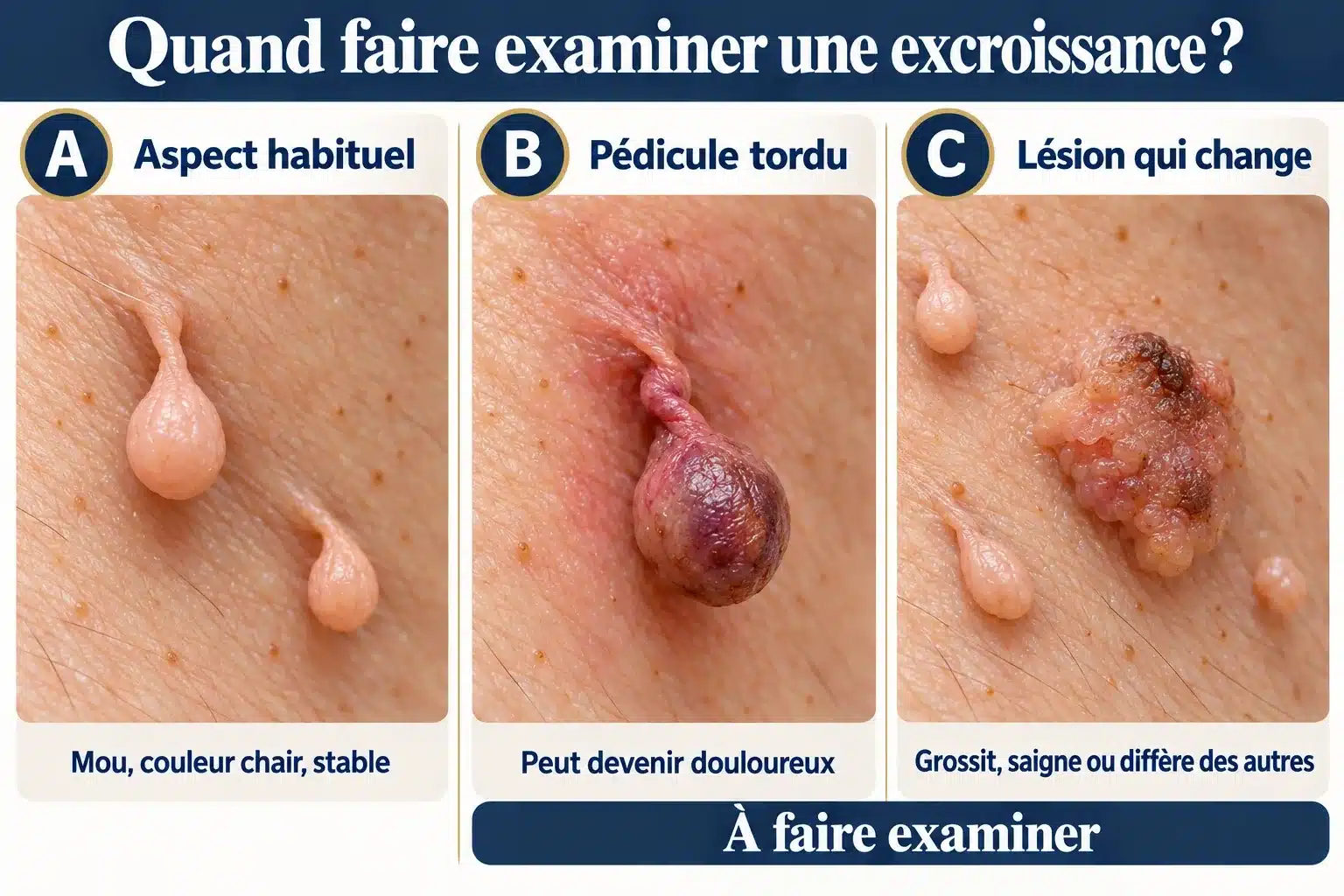
A skin tag, however, can become bothersome. It can stick to clothing or jewelry, and repeated friction can cause it to bleed or itch [ 1 ] . It becomes painful if it infarcts [ 7 ] , that is, if blood no longer circulates within it, which can happen when its stalk twists [ 8 ] . These cases have been described particularly in large skin tags [ 8 , 15 ].
To remember
A typical skin tag is benign. Have a growth examined that changes, bleeds for no reason, grows quickly or does not look like others: a sample (biopsy) or removal of the lesion is indicated if there is doubt or unusual or rapid change [ 3 ].
Skin tag or other lesion: when should you consult a doctor?
Most benign skin tumors are identified by their history, distribution, and appearance [ 3 ] . However, some rare lesions can mimic a skin tag: basal cell carcinomas, a form of skin cancer, in patients with a rare genetic disorder, Gorlin syndrome [ 16 , 17 ] , and, exceptionally, a melanoma metastasis [ 18 ] . The table below can help you identify them; only a medical examination can provide a definitive diagnosis.
| What we observe | What this could be | Where to read more |
|---|---|---|
| A small, soft, flesh-colored or brown growth on a stem, in a fold. | Most often it's a skin tag; a medical examination confirms it.[1, 3] | This page |
| Raised brown spot, appearing "placed" on the skin | It could be seborrheic keratosis, a benign lesion.[3] : to show if it changes or bleeds | Seborrheic keratosis |
| Small, raised, brown or flesh-colored bump, sometimes soft | It could be a mole (nevus): have it examined before any removal | Raised beauty mark |
| Small, shiny, pearl-like papules, flesh-colored or white, often in groups, especially in children[14] | It could be molluscum contagiosum, a contagious viral infection, unrelated to molluscum pendulum.[14] | General practitioner or dermatologist |
| A lump under the skin, not a growth on a stem | It could be a cyst or a lipoma | Cyst under the skin · lipoma |
| A lesion that bleeds for no reason, grows quickly, changes color, or doesn't look like other lesions | An examination is indicated[3] It is necessary to rule out skin cancers with a deceptive appearance, such as basal cell carcinoma or melanoma.[16, 18] | Basal cell carcinoma · Melanoma |
For moles, the warning signs are summarized in our article on mole warning signs (ABCDE rule) . A full-body skin examination is presented on the mole screening page . The different types of skin cancer are described on the skin cancer page.
Why do skin tags appear? Causes and associated factors
Their mechanism remains debated [ 13 , 19 ] . Several factors are associated with their presence, which does not mean that they cause them.
| Postman | What studies show | To remember |
|---|---|---|
| Friction and creases | Frequent occurrence in groups in areas of friction[7] | The neck and armpits are the most affected areas.[5, 6] |
| Age | Frequency increases until around age 50 (750 people)[5] ; number of lesions increasing with age (521 people)[20] | New skin tags may appear over the years |
| Overweight, obesity | Higher presence and number in obese individuals[20] ; one of the common skin manifestations of obesity[21] | This link has been found in several studies, but not all.[22] There is no evidence to suggest that weight loss makes them disappear. |
| Diabetes, insulin disorders | Diabetes was more frequent in 110 carriers than in a comparison group of 110 people (56 versus 10).[23] ; 26% of diabetics among 216 carriers, without a comparison group[22] ; a possible role for insulin in a small study (30 cases)[19] | An association, not a proven cause. In a study of 521 people, skin tags were linked to obesity, not diabetes.[20] |
| Children and teenagers | Obesity (42% vs. 21%), type 2 diabetes, high blood fat, and hypertension were more frequent in 55 young carriers than in a national US sample.[24] | Single-center retrospective study |
| Pregnancy | Described among the common skin tumors of pregnant women in an old review[25] ; 15 cases among 607 pregnant women in an Indian study[26] | Limited data available; have a lesion that changes examined. |
| Family lot | A family history and certain rare genetic diseases predispose individuals to this condition.[1] | Mention it during the consultation |
If you have many skin tags, talk to your doctor: they will determine whether an assessment (blood sugar, weight, blood pressure) is necessary. This precaution is based on comparative studies [ 6 , 23 ] , not on an official recommendation.
Can skin tags be prevented?
No method has proven effective. Friction and excess weight are associated with their presence [ 7 , 20 ] , but there is no evidence to suggest that looser clothing or weight loss will make them disappear.
Should a skin tag be removed?
Not necessarily. A typical skin tag can remain in place: treatment is decided according to the lesion, skin type, and your preference [ 3 ] . It is generally removed in four situations:
- It's bothersome: it clings to clothes or jewelry, or it bleeds and itches from friction.[1] ;
- It has become painful, for example because blood no longer circulates there.[7] after a twisting of its pedicle[8] ;
- does its appearance bother you[7, 27] ;
- Its appearance is unusual or has changed: removing it allows for analysis.[3].
Therefore, not all skin tags need to be removed: only those that are bothersome, painful, whose appearance disturbs you, or that pose a diagnostic question.
Is it dangerous to cut off a skin tag yourself?
This is not recommended. Cutting a skin tag often causes it to bleed, and this bleeding must then be stopped (hemostasis) [ 28 ] . Above all, you risk removing a lesion that is not a skin tag without examination [ 2 ] . Products sold to "burn" moles and skin tags should also be avoided. In the United States, 38 cases of burns, pain, and ulceration, sometimes with permanent scarring, have been linked to unauthorized products [ 29 ] . Fourteen involved the face, including four near the eye [ 29 ].
Who can remove a skin tag: a general practitioner, a dermatologist, or a surgeon?
The diagnosis is most often clinical, that is, made during an examination [ 3 ] . Your general practitioner or a dermatologist can confirm it. A journal for general practitioners describes removal in the GP's office, or referral to a specialist [ 27 ] . Removal can also be performed by a dermatologist or a surgeon: therefore, it is not essential to consult a dermatologist to have a skin tag removed when the diagnosis is clear.
At the center, the examination and removal are performed by Dr. Stroumza-Escoffier, a plastic surgeon. He is not a dermatologist. For a lesion on the eyelid or genital area, or for a child, please ask when making your appointment if the removal can be done at the center.
Skin tag treatment: what techniques are used to remove it?
Several techniques exist: sectioning with scissors, tangential excision (at skin level), electrocoagulation, or cryotherapy [ 3 , 27 ] . They are not all equal in every respect. A lesion removed whole can be analyzed under a microscope; a lesion destroyed by cold, heat, or light cannot be.
| Technical | Principle | What studies show | In the center |
|---|---|---|---|
| Section with sterile scissors | The pedicle is severed; the lesion can be analyzed. | 2025 trial: 85% complete cure rate at 12 weeks, compared to 71% with laser, less pain, method chosen by 63% of patients for subsequent treatment; reference technique for pedunculated lesions according to the authors[7]Frequent minor bleeding, often stopped by applying a product to the wound; color change upon checking the 2nde week in 17 to 50% of patients depending on the product, in a study of 12 patients without follow-up beyond[28] | Yes, when excision is indicated |
| Cryotherapy (liquid nitrogen) | The lesion is destroyed by the cold. | Routine treatment[3]On dark skin, there is a risk of lighter spots (hypopigmentation), which should be discussed.[3] Hypopigmentation or scarring were common according to the authors of the 2025 trial.[7] | Yes, depending on the nature and location of the lesion. |
| electrocoagulation | The lesion is destroyed by an electric current | Technique described[27] Hypopigmentation or scarring were common according to the authors of the 2025 trial.[7] | Not offered at the center as a removal technique; coagulation may be performed if necessary to stop bleeding |
| Laser | The lesion is destroyed by the laser light. | 532 nm laser in the 2025 trial: 39% faster, no bleeding or dressing required, but less frequent complete healing (71%), more redness and pigmentation disturbances, necrotic lesions visible for up to 3 weeks[7]On dark skin, there is a risk of hypopigmentation.[3] | Not practiced at the center |
| Products sold without medical advice | caustic products applied to the skin | 38 cases of serious injuries (burns, ulcerations, permanent scarring) linked to products not authorized in the United States[29] | Not recommended |
The authors of the 2025 trial tested only one laser and call for the others to be studied [ 7 ].
How does the withdrawal process at the center work?
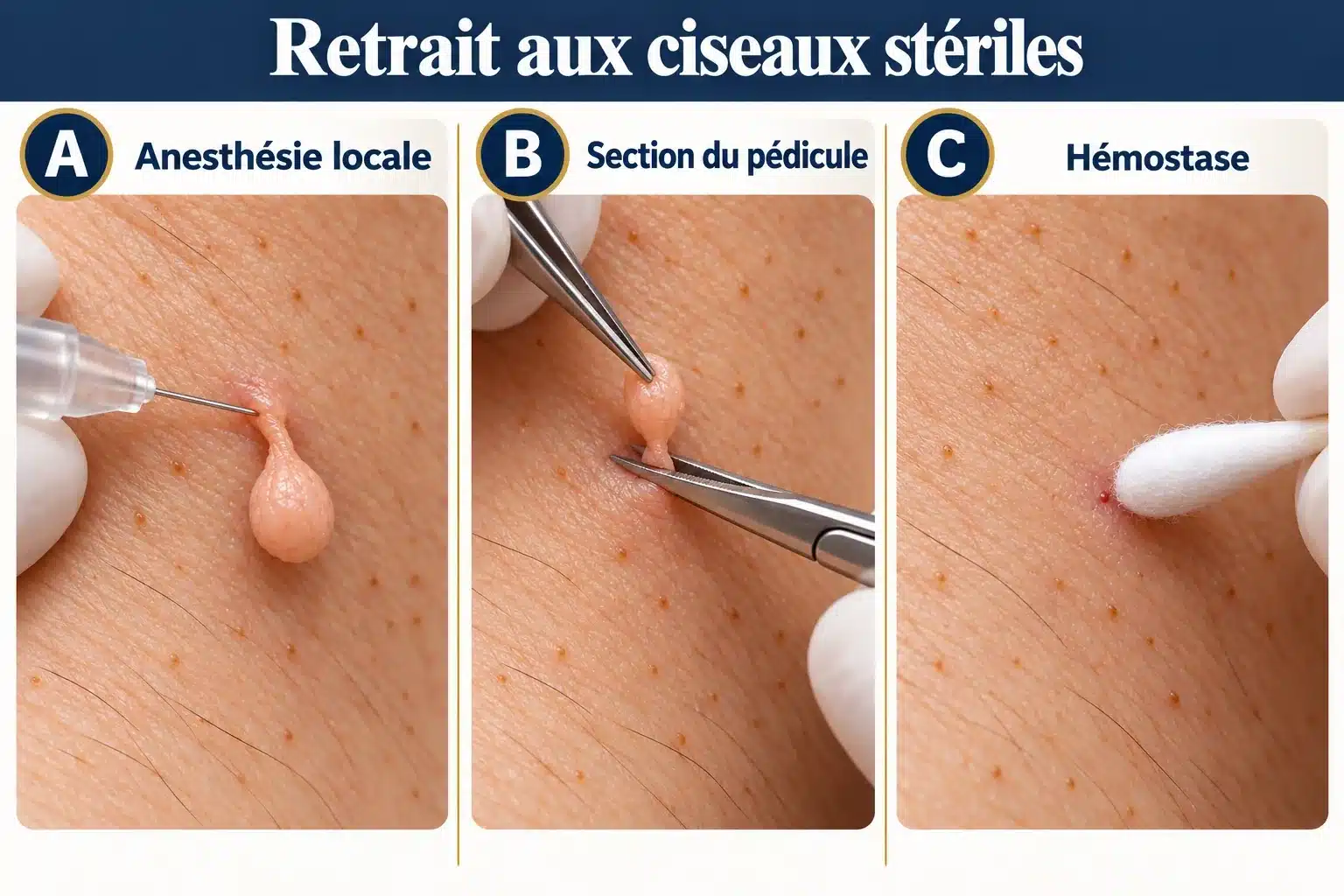
- Consultation. Examination of the lesion and surrounding skin, confirmation of the diagnosis, questions about your treatments and medical history. Report a tendency towards thick or raised scarring (keloid scarIf the removal is for cosmetic purposes, the cost will be provided to you before the procedure, in a detailed quote starting from €300.[4].
- Anesthesia. At the center, surgical removal is always performed under local anesthesia, sometimes preceded by an anesthetic cream. The injection may sting for a few seconds. In the 2025 trial, pain was less with scissors than with laser removal.[7].
- Withdrawal. The pedicle is cut with sterile scissors.[7, 27].
- Hemostasis. The slight bleeding that often follows the incision is stopped, for example by a product applied to the wound.[28]Coagulation can also be performed in the office if necessary. Depending on the product, this application may sting: in a small study, silver nitrate was more painful than aluminum chloride or ferric sulfate.[28].
- Analysis. If there is any doubt, the removed lesion can be analyzed under a microscope (anatomopathological examination).[2, 3].
In practice
If a lesion has changed, bring your photos. Mention any current treatments and any history of difficult scarring. Make an appointment at the center , 11 rue du Faubourg Saint-Honoré, Paris 8th arrondissement.
After removal: healing, scarring, and recurrence
The healing time depends on the size of the lesion and the technique used. See also our tips for proper healing.
Any removal can leave a small mark, sometimes lighter or darker than the surrounding skin. After stopping bleeding with a chemical agent, a color change was visible at 2 weeks in 17% to 50% of patients, depending on the agent, in a small study of 12 patients who did not follow up beyond that time: it is unknown whether these early changes persisted [ 28 ] . Redness and pigmentation disturbances were more frequent after laser treatment than after scissor removal [ 7 ] . On dark skin, cryotherapy and laser treatment carry a risk of light spots [ 3 ] . If a scar bothers you, scar treatment can be considered.
None of the studies cited on this page measure regrowth in the same location over the long term: the 2025 trial assessed the outcome at 12 weeks [ 7 ] . According to Dr. Stroumza-Escoffier's experience, a completely removed skin tag generally does not regrow in the same location. However, new skin tags may appear elsewhere after removal, as their number increases with age [ 5 , 20 ].
Skin tag removal: price and reimbursement
The price depends on the number of lesions, their location, and the technique used. At the center: the consultation costs €100 and surgical removal starts at €250, based on a quote that varies depending on the number of lesions and the procedure required. Dr. Stroumza-Escoffier is a participating physician in the French healthcare system's Sector 2 (conventionné secteur 2), and is not a member of the OPTAM network; depending on the indication and your supplemental health insurance policy, coverage may include up to the full cost of the fees, but this is not guaranteed. You have the right to be informed of the cost of procedures before they are performed [ 30 ] . For cosmetic procedures, a detailed quote is mandatory for procedures costing €300 or more [ 4 ].
| Situation | Refund | What there is to know |
|---|---|---|
| Removal for purely cosmetic purposes | None: neither the procedure, nor the examinations, nor the prescriptions, nor the potential sick leave[4] | The absence of coverage is indicated on the quote. A detailed quote is mandatory for amounts over €300; below that, an information document is provided, and a quote is available upon request.[4]. |
| Medically justified withdrawal | Based on the rate set by the medical agreement[30] | The doctor will tell you during the consultation whether your situation requires treatment. |
| Excess fees | Not reimbursed by Health Insurance when consulted by a doctor in sector 2 (unrestricted fees), whether or not they have opted into the Optam scheme (controlled pricing practice option).[30] | Your supplemental health insurance may cover part of it.[30]. |
| Consultation outside of coordinated care pathway | Reimbursement reduced to 30% of the standard rate[31] | The healthcare pathway begins with your primary care physician.[31] |
The fees for other services provided by the centre are listed on the rates and reimbursements page.
F.A.Q
Is a skin tag dangerous?
It is a benign lesion (Pandey, 2026 [1]). It may be bothersome, become attached, bleed from friction, or become painful if blood flow is impaired (Haase, 2025 [7]), for example, when its stalk twists (Cuellar-Barboza, 2019 [8]). Have any growth examined that changes, bleeds for no apparent reason, or grows rapidly (Shen-Wagner, 2024 [3]).
Can a skin tag be cancerous?
This is very rare. In one American laboratory, 5 of the 1,335 lesions referred with a diagnosis of skin tag were actually malignant tumors (Eads, 1996 [2]). No link has been demonstrated with colon polyps (Radack, 1993 [9]; Gould, 1988 [10]).
Are skin tags contagious?
None of the studies cited on this page describe person-to-person transmission. Their link to certain papillomaviruses is debated, without established proof: the studies contradict each other (Dianzani, 1998 [11]; Woo, 2020 [13]). Do not confuse them with molluscum contagiosum, a highly contagious viral infection in children (Dermato-Info [14]).
Can you remove a skin tag yourself?
It is not recommended: cutting a skin tag often causes it to bleed (Coakley, 2020 [28]), and you risk removing a lesion that is not a skin tag without examination. Products sold to "burn them off" have caused burns and permanent scarring, including near the eye (Konkel, 2023 [29]).
Should you consult a dermatologist to remove a skin tag?
Not necessarily. Your general practitioner or a dermatologist can confirm the diagnosis, which is most often made during the examination (Shen-Wagner, 2024 [3]). Removal can be performed by a general practitioner, a dermatologist, or a surgeon (Higgins, 2015 [27]); in the center, by a plastic surgeon.
How much does it cost to remove a skin tag?
The price depends on the number of lesions, their location, and the technique used. At the center: consultation €100, surgical removal from €250, based on a quote depending on the number of lesions and the procedure required. The amount must be communicated to you before the procedure (Service-Public [30]). For cosmetic procedures, a detailed quote is mandatory starting at €300 (decree of October 17, 1996 [4]).
Is the removal of a skin tag covered by insurance?
If it is purely cosmetic, no: Health Insurance does not cover the procedure or related costs (decree of October 17, 1996 [4]). If it is medically justified, it is reimbursed based on the rates of the medical agreement; any excess fees remain your responsibility or that of your supplemental insurance (Service-Public [30]).
Is the removal painful?
The injection of local anesthetic may sting for a few seconds. In a 2025 trial, pain was less with scissors than with the laser (Haase, 2025 [7]). The doctor will tell you before the procedure if an injection is necessary in your case.
Does the removal leave a scar?
A small mark may remain, sometimes lighter or darker than the surrounding skin. Color changes were observed at the 2-week follow-up in 17% to 50% of patients, depending on the product used to stop bleeding, with no further follow-up (Coakley, 2020 [28]). On dark skin, cryotherapy and laser treatment can result in light spots (Shen-Wagner, 2024 [3]).
Can a skin tag grow back?
None of the studies cited on this page measure regrowth in the same location over the long term: the 2025 trial assessed the outcome at 12 weeks (Haase, 2025 [7]). However, new skin tags can appear elsewhere after removal: their number increases with age (El Safoury, 2011 [20]).
Should all skin tags be removed?
No. We remove those that are bothersome, painful, whose appearance disturbs you, or that pose a diagnostic question. The choice depends on the lesion, the skin type, and your preference (Shen-Wagner, 2024 [3]).
Can a skin tag be removed from the face or eyelid?
On the face, removal is possible; a small mark may remain. For the eyelid, ask when making your appointment if removal can be done in the center. Never apply caustic products near the eye: 4 of the 38 serious injuries related to these products involved this area (Konkel, 2023 [29]).
Are skin tags linked to diabetes?
Diabetes is more common in people with skin tags than in a control group (Şenel, 2011 [23]), and skin tags are more numerous in obese individuals (El Safoury, 2011 [20]): this is an association, not a proven cause. If you have many skin tags, talk to your doctor, who will determine if further evaluation is necessary.
Are skin tags common during pregnancy?
An older review describes them among the common skin tumors of pregnant women (Errickson, 1994 [25]). In an Indian study, 15 of the 607 pregnant women examined had them (Kumari, 2007 [26]). Data remain limited: have any lesion that changes or bleeds examined.
About Dr. Nathaniel Stroumza-Escoffier
Dr. Nathaniel Stroumza-Escoffier — plastic surgeon in the 8th arrondissement of Paris , qualified in plastic, reconstructive, and aesthetic surgery. RPPS 10100674943. Former assistant clinical director at the hospitals of Paris. His core practice focuses on the surgical treatment of skin lesions: excision, closure and reconstruction, and scar revision. Dr. Stroumza-Escoffier's career path.
Office: 11 rue du Faubourg Saint-Honoré, 75008 Paris. Contact the office.
References
- Pandey A, Saleh HM. Skin Tag (Skin Tag). StatPearls. Treasure Island (FL): StatPearls Publishing; 2026 (updated December 13, 2025). PMID 31613504. Summary chapter, not systematic: definition, estimated frequency, locations, discomfort, associated factors.
- Eads TJ, Chuang TY, Fabré VC, Farmer ER, Hood AF. The utility of submitting fibroepithelial polyps for histological examination. Arch Dermatol. 1996;132(12):1459-1462. PMID 8961875. Retrospective review of 11,500 consecutive reports from a dermatopathology laboratory (United States).
- Shen-Wagner J, Amidon J, Carek S. Diagnosing Common Benign Skin Tumors. Am Fam Physician. 2024;110(4):353-361. PMID 39418568. A narrative journal intended for general practitioners.
- Order of 17 October 1996 relating to the advertising of prices for medical and surgical procedures for cosmetic purposes, articles 1 to 3. Légifrance, text in force, accessed on September 26, 2026. Detailed quote starting from €300; mention of the absence of coverage by Health Insurance.
- Banik R, Lubach D. Skin tags: localization and frequencies according to sex and age. Dermatologica. 1987;174(4):180-183. PMID 3582706. Cross-sectional study, 750 people not selected.
- Akpinar F, Dervis E. Association between skin tags and the components of metabolic syndrome. Eur J Dermatol. 2012;22(1):106-110. PMID 22063265. Case-control study (Istanbul), 192 patients and 104 controls.
- Haase O, Winkelmann-Schirmer C, Mrowka P, Krengel S. Removal of skin tags: scissor excision versus non-ablative 532nm-LBO-laser in a randomized intraindividual controlled observer-blinded clinical trial: laser is not always better. Arch Dermatol Res. 2025;317(1):753. PMID 40347285. Intra-individual randomized, blinded evaluator trial, single center (Lübeck, Germany): 68 patients, 1,257 skin tags on the neck or armpits; only one type of laser tested.
- Cuellar-Barboza A, Cardenas-de la Garza JA, Martinez-Moreno A, et al. Giant Lumbar Polypoid Tumor with Bullae on its Surface. Acta Dermatovenerol Croatia. 2019;27(2):127-128. PMID 31351510. Letter, clinical case (ischemic giant skin tag); describes ischemia due to torsion of the pedicle.
- Radack K, Park S. Is there a valid association between skin tags and colonic polyps: insights from a quantitative and methodological analysis of the literature. J Gen Intern Med. 1993;8(8):413-421. PMID 8410406. Methodological and quantitative analysis: studies too heterogeneous for a meta-analysis.
- Gould BE, Ellison RC, Greene HL, Bernhard JD. Lack of association between skin tags and colon polyps in a primary care setting. Arch Intern Med. 1988;148(8):1799-1800. PMID 3401101. Primary care study, 492 patients, blinded sigmoidoscopy.
- Dianzani C, Calvieri S, Pierangeli A, et al. The detection of human papillomavirus DNA in skin tags. Br J Dermatol. 1998;138(4):649-651. PMID 9640372. Small series (Rome), 49 patients.
- Gupta S, Aggarwal R, Gupta S, Arora SK. Human papillomavirus and skin tags: is there any association? Indian J Dermatol Venereol Leprol. 2008;74(3):222-225. PMID 18583787. Small series (India), 37 skin tags.
- Woo YR, Jung Y, Park HJ. Lack of an etiologic role of human papillomavirus in the development of skin tags in the Korean population: a cross-sectional comparative study. Indian J Dermatol Venereol Leprol. 2020;86(5):588-591. PMID 32769308. Comparative cross-sectional study (Korea).
- French Society of Dermatology. Molluscum contagiosum. Dermato-Info. dermato-info.fr, accessed September 26, 2026. French institutional source.
- López-Jiménez EC, Ruiz-Rodríguez R, Sánchez-Carpintero I. Infarcted Giant Skin Tag. Actas Dermosifiliogr (Engl Ed). 2019;110(7):e17. PMID 30072024. Clinical case.
- Lortscher DN, Sengelmann RD, Allen SB. Acrochordon-like basal cell carcinomas in patients with basal cell nevus syndrome. Dermatol Online J. 2007;13(2):21. PMID 17498440. Clinical cases (2 patients).
- Feito-Rodríguez M, Sendagorta-Cudós E, Moratinos-Martínez M, et al. Dermatoscopic characteristics of acrochordon-like basal cell carcinomas in Gorlin-Goltz syndrome. J Am Acad Dermatol. 2009;60(5):857-861. PMID 19233510. Clinical case with dermoscopy-histology correlation.
- Kollitz KM, Tcheung WJ, Scheri RP, et al. A skin tag-like melanoma metastasis. Arch Dermatol. 2012;148(1):136-137. PMID 22250257. Unique case.
- Köseoğlu HG, Bozca BC, Başsorgun Cİ, et al. The role of insulin-like growth factor in Acrochordon Etiopathology. BMC Dermatol. 2020;20(1):14. PMID 33143702. Observational study (Antalya, Türkiye), 30 cases and 30 controls.
- El Safoury OS, Ibrahim M. A clinical evaluation of skin tags in relation to obesity, type 2 diabetes mellitus, age, and sex. Indian J Dermatol. 2011;56(4):393-397. PMID 21965846. Cross-sectional study (Cairo), 521 people including 276 diabetics.
- Hirt PA, Castillo DE, Yosipovitch G, Keri JE. Skin changes in the obese patient. J Am Acad Dermatol. 2019;81(5):1037-1057. PMID 31610857. Narrative review.
- Kahana M, Grossman E, Feinstein A, et al. Skin tags: a cutaneous marker for diabetes mellitus. Acta Derm Venereol. 1987;67(2):175-177. PMID 2438887. Descriptive series (Israel), 216 patients, without a control group.
- Şenel E, Salmanoğlu M, Solmazgül E, İnal BB. Skin tags as a cutaneous sign of impaired carbohydrate metabolism, hyperlipidemia, liver enzyme abnormalities and hypertension: a case-control study. J Eur Acad Dermatol Venereol. 2023;37(9):1811-1814. PMID 37622223 (originally published online on December 21, 2011) PMID 22188364). Case-control study (Türkiye), 110 patients and 110 controls.
- Greene RK, Gangidi S, Zhao R, et al. The relationship between skin tags, obesity, and metabolic syndrome in the pediatric population: a retrospective cohort study. Pediatr Dermatol. 2024;41(4):660-666. PMID 38684337. Retrospective cohort from a single center (Michigan), 55 young people under 18 years of age, compared to the US national NHANES survey.
- Errickson CV, Matus NR. Skin disorders of pregnancy. Am Fam Physician. 1994;49(3):605-610. PMID 8310967. Narrative review.
- Kumari R, Jaisankar TJ, Thappa DM. A clinical study of skin changes in pregnancy. Indian J Dermatol Venereol Leprol. 2007;73(2):141. PMID 17458033. Clinical study (Pondicherry, India), 607 consecutive pregnant women.
- Higgins JC, Maher MH, Douglas MS. Diagnosing Common Benign Skin Tumors. Am Fam Physician. 2015;92(7):601-607. PMID 26447443. A narrative journal intended for general practitioners.
- Coakley A, Wu MJ, Kumar J, et al. A Comparison of Ferric Subsulfate Solution, Silver Nitrate, and Aluminum Chloride for Pain Assessment, Time to Hemostasis, and Cosmesis in Acrochordon Snip Excision. J Clin Aesthet Dermatol. 2020;13(12):32-37. PMID 33488917. Intra-individual comparative study, 12 patients; no significant difference in pigmentation between the products.
- Konkel K, Reyes M, Diak IL, Cao K, McCulley L. Serious Skin Injuries Following Exposure to Unapproved Mole and Skin Tag Removers. J Clin Aesthet Dermatol. 2023;16(1):14-17. PMID 36743972. Pharmacovigilance case series (FDA, USA): 8 reports and 30 consumer reviews; likely underreporting.
- Service-Public.fr (Directorate of Legal and Administrative Information). What are the fees for a doctor (whether contracted or not)? service-public.frPage verified on December 22, 2024.
- Service-Public.fr (Directorate of Legal and Administrative Information). Reimbursement for a medical consultation. service-public.frPage verified on December 22, 2024.
Page written under the responsibility of Dr. Nathaniel Stroumza-Escoffier , plastic surgeon (qualified in plastic, reconstructive and aesthetic surgery), former assistant clinical head of the hospitals of Paris — RPPS 10100674943. Published on May 15, 2025, updated on October 8, 2026. This page is for informational purposes only and does not replace a medical consultation.
The different types of dermatological surgery
A wide range of skin conditions can be treated surgically. The type of procedure always depends on the nature and severity of the lesion.