Introduction
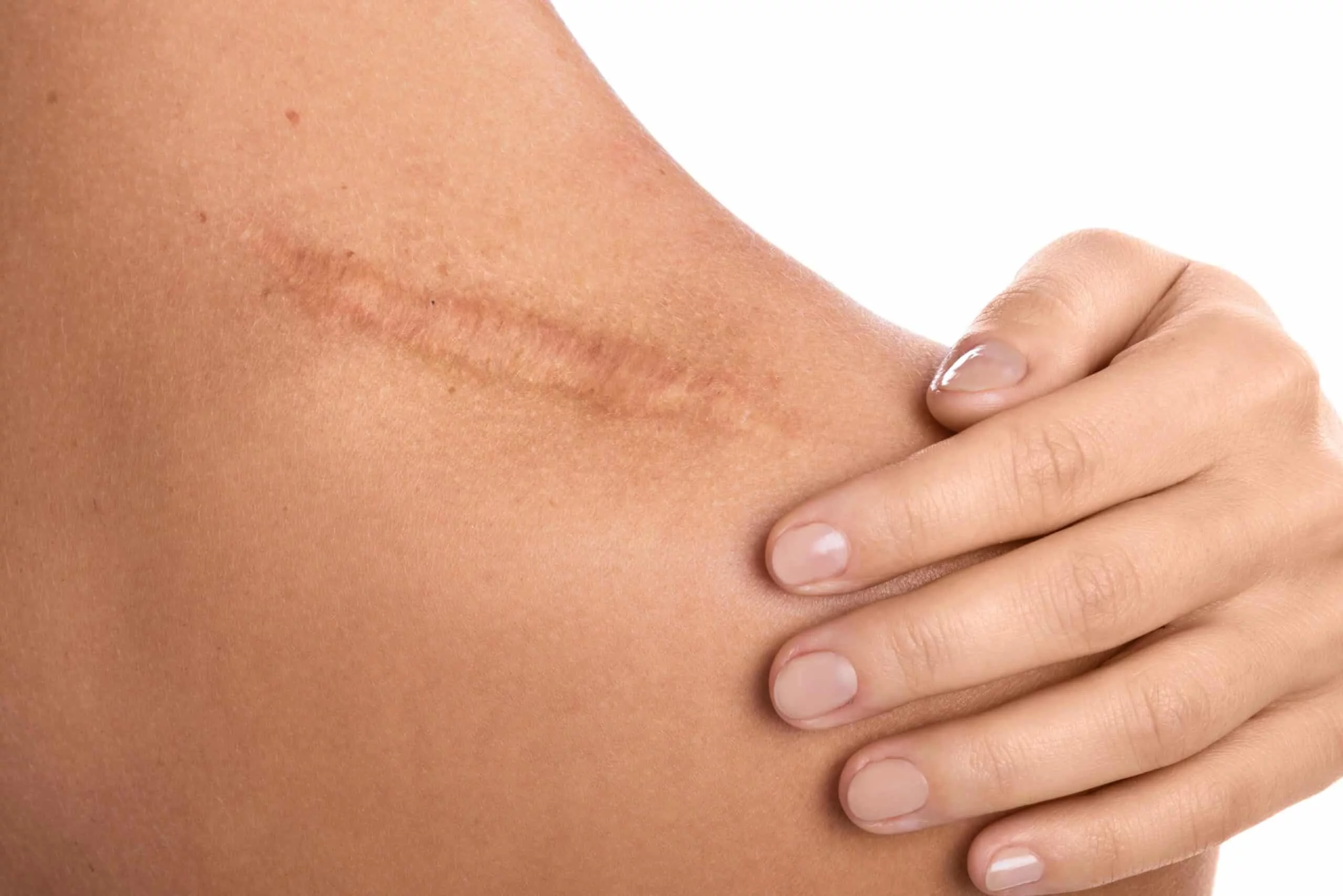
Healing is a natural process, but it can be improved with simple steps. At our center, we guide each patient to achieve a discreet scar and a natural result after any dermatological surgery or removal of skin lesions.
Methods to improve wound healing
Massages and mobilization
Gently massaging the scar, once the wound has closed, stimulates blood circulation and promotes tissue elasticity. This also helps limit the formation of hypertrophic scars.
Healing creams
Specialized creams contain active ingredients that hydrate the skin and accelerate cell renewal. Regular application improves the appearance and texture of the scar.
Silicone dressings
Silicone dressings or sheets create an optimal environment for healing. They reduce redness and skin tension, limiting visible scarring.
Medical laser
Laser treatment can be used to reduce the discoloration of a scar or to improve its elasticity. It is particularly effective on recent or thick scars.
Corticosteroid injections
In the case of keloid or hypertrophic scarring, the surgeon may suggest local corticosteroid injections to reduce volume and inflammation.
Additional tips for optimal healing
- Avoid direct sun exposure on the scar.
- Keep the area clean and protected.
- Follow your surgeon's post-operative recommendations. For complex cases, the Reconstructive surgery can be considered.
- Be patient: complete healing can take several weeks to several months.
(Image – alt: “improve healing after dermatological surgery”)
FAQ on improving wound healing
When should I start massaging the scar?
As soon as the wound is closed and the surgeon gives the go-ahead, usually after 2 to 3 weeks.
Are silicone dressings effective on all scars?
They are particularly effective on recent or hypertrophic scars, but do not replace appropriate postoperative care.
Can a healing cream be used on an old scar?
Yes, some creams can improve the appearance of even older scars, but the effect is often gradual.
Is laser treatment painful?
Laser treatment may cause a slight tingling or warming sensation, but it is well tolerated and often combined with local anesthesia.
Are corticosteroid injections routine?
No, they are reserved for keloid or hypertrophic scars that require specific intervention.
About the Author
Dr Nathaniel Stroumza-Escoffier — Plastic and aesthetic surgeon in Paris 8th arrondissement.
Former Head of Clinic at Tenon Hospital (AP-HP), Fellowships in plastic surgery in Brisbane (Australia) and Montreal (Canada). Author of scientific publications indexed on PubMed. First French surgeon trained in MIA prostheses, pioneer of Quantum radiofrequency in France.
RPPS: 10100674943 · → Discover the complete career path (publications, degrees, fellowships)
This article is for informational purposes only and does not replace a medical consultation.