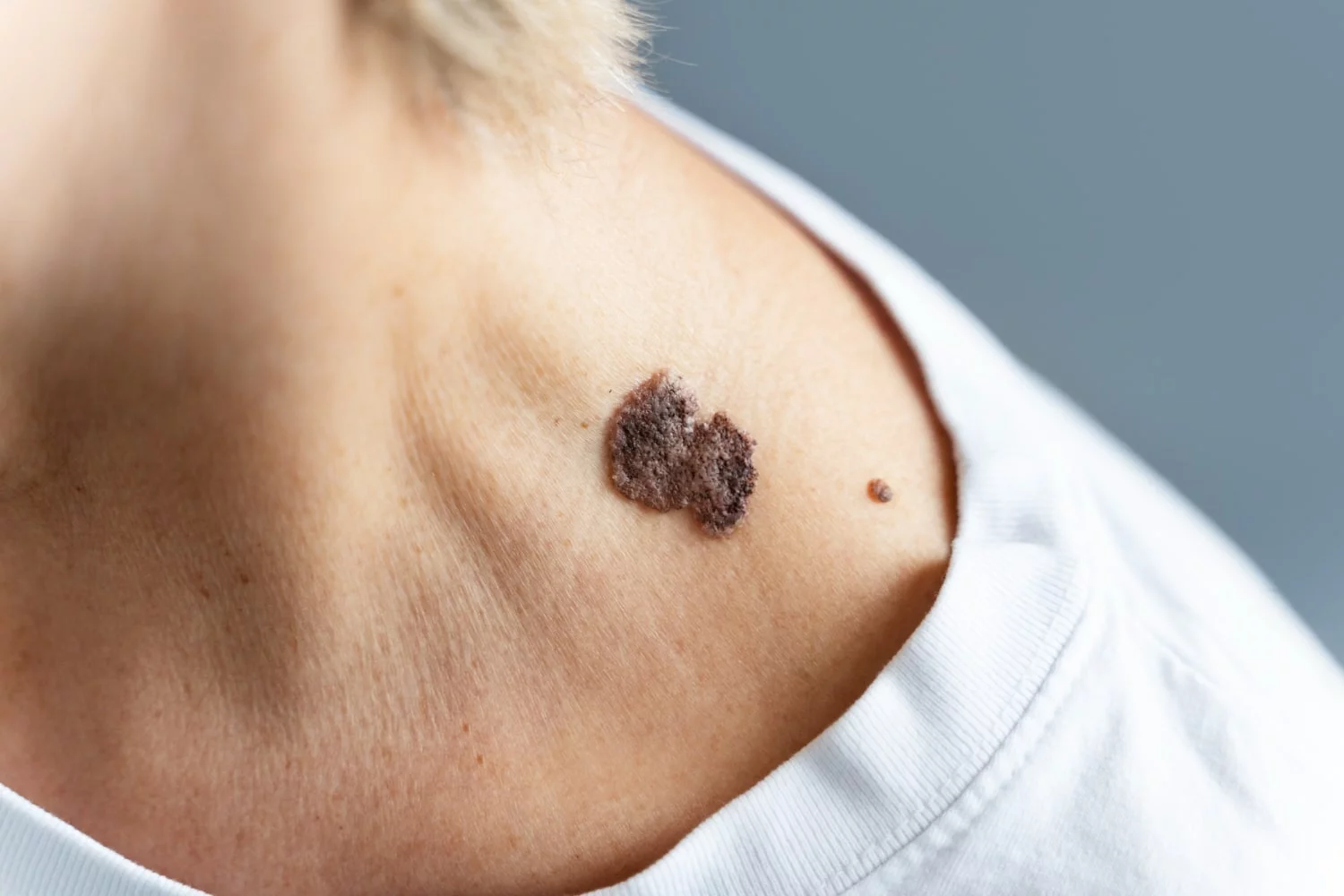
Understanding skin cancer
Skin cancers are steadily increasing, mainly due to excessive sun exposure and the aging population. Fortunately, it is possible to take effective action by combining preventive and curative measures.
Preventive measures to avoid skin cancer
Avoid excessive sun exposure
The leading cause of skin cancer remains the sun. Avoid sun exposure during the hottest hours (11 a.m. to 16 p.m.) and protect yourself with protective clothing, hats, and sunglasses.
Use a high SPF sunscreen
Applying a broad-spectrum sunscreen (SPF 50+) is essential during sun exposure, even on cloudy days. The cream should be reapplied every two hours and after swimming.
Limit exposure to carcinogens
Certain chemicals and radiation can increase the risk of skin cancer. It is recommended to avoid repeated contact with these harmful agents, particularly in high-risk occupational environments.
Stop smoking
Smoking is a contributing factor to many cancers, including skin cancer. Quitting smoking helps improve skin health and reduce overall risk.
Curative measures: detect and treat in time
Regular monitoring of moles
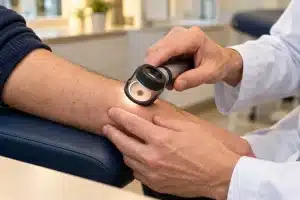
Self-examination of the skin allows for the early detection of any abnormalities. The ABCDE rule (Asymmetry, Borders, Color, Diameter, Evolution) helps to identify a suspicious lesion.
Dermatological consultation
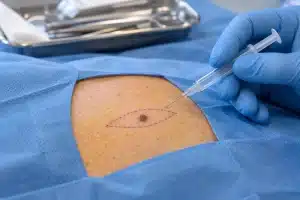
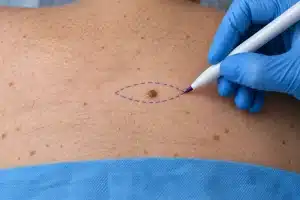
Regular follow-up with a dermatologist allows for an accurate diagnosis. If there is any doubt, a biopsy or preventive excision is performed.
Removal of suspicious lesions
Curative treatment often relies on the surgical removal of suspicious lesions. This procedure, performed by a dermatological surgeon , helps limit the risk of progression to invasive cancer.
Prevention and action: a complementary role
Prevention remains the most effective weapon, but vigilance and rapid treatment of suspicious lesions are essential to avoid progression to skin cancer.
FAQs on skin cancer prevention
What are the most common types of skin cancer?
The most common are basal cell carcinoma, squamous cell carcinoma, and melanoma.
At what age should sun protection begin?
From childhood, because repeated sunburns in the early years increase the risk of melanoma in adulthood.
Does sunscreen provide complete protection against skin cancer?
No, it reduces the risks but does not replace avoiding prolonged exposure and regular skin monitoring.
When to consult a dermatologist?
As soon as a mole changes in appearance or a skin lesion does not heal after a few weeks.
Is the preventive removal of a mole recommended?
Yes, if it is suspicious or bothersome, it can be removed by a dermatological surgeon to prevent any further development.
About the Author
Dr Nathaniel Stroumza-Escoffier — Plastic and aesthetic surgeon in Paris 8th arrondissement.
Former Head of Clinic at Tenon Hospital (AP-HP), Fellowships in plastic surgery in Brisbane (Australia) and Montreal (Canada). Author of scientific publications indexed on PubMed. First French surgeon trained in MIA prostheses, pioneer of Quantum radiofrequency in France.
RPPS: 10100674943 · → Discover the complete career path (publications, degrees, fellowships)
This article is for informational purposes only and does not replace a medical consultation.