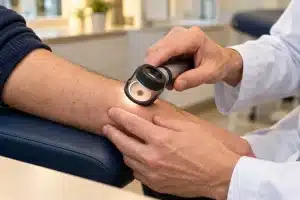
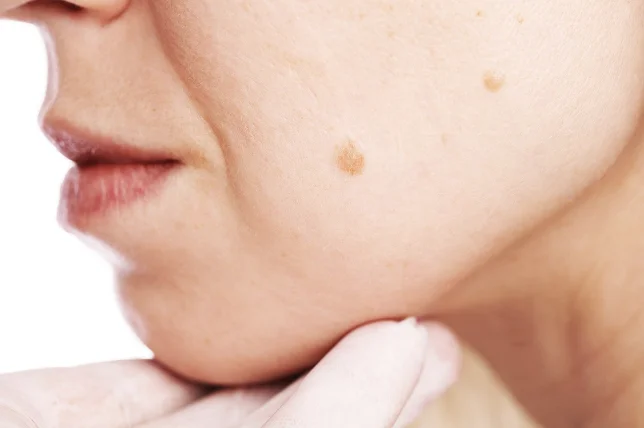
Benign lesions removed in the office are very common in dermatology. Even if they pose no health risk, they can be a source of aesthetic or functional discomfort. At our dermatological surgery center , several types of benign skin lesions can be removed simply, quickly, and safely, without hospitalization.
The main benign lesions
lipoma
A lipoma is a small, benign tumor made up of fat cells. It forms a soft lump under the skin and grows slowly. While usually painless, it can become bothersome due to its size or location. Surgical removal in the office allows for its permanent elimination.
Sebaceous cyst
A sebaceous cyst is a pocket filled with sebum, often located on the scalp, back, or face. Although harmless, it can become infected or inflamed. Treatment involves minor surgery performed in the office to remove the entire cyst and prevent recurrence.
Acrochordon (pendulum)
Also known as skin tags, acrochordons are small, soft growths on the skin, commonly found on the neck, armpits, or eyelids. They are completely benign, but can be removed when they become bothersome or unsightly. Removal in the office is quick and easy, under local anesthesia.
Mole (nevus)
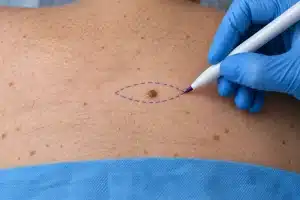
Most moles are benign. However, some may be located in an area of friction or pose a cosmetic concern. In such cases, removal may be recommended. In all cases, each removed mole is analyzed to ensure it is not cancerous.
angiomas
An angioma is a small red mark caused by a benign malformation of the blood vessels. Often harmless, it can nevertheless bleed or be a cosmetic concern. In these cases, surgical or laser treatment may be offered in the office.
A simple and secure process
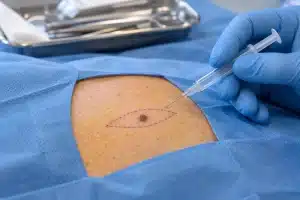
The removal of benign lesions in the office is always performed under local anesthesia in a safe medical environment. The procedure is short, relatively painless, and allows the patient to quickly resume their activities. Post-operative follow-up is provided to ensure proper healing and prevent any complications.
FAQs about benign lesions removed in the office
What are the advantages of removing a benign lesion in the office?
This allows for the rapid treatment of a bothersome or unsightly lesion, without hospitalization, with a simple and safe procedure.
Is the removal of a benign lesion painful?
No. The procedure is performed under local anesthesia, which makes it painless. Slight discomfort may persist for a few days.
Do all benign lesions need to be removed?
No. Only those that cause discomfort, present a risk of infection, or pose an aesthetic problem require removal.
Does a removed mole always need to be analyzed?
Yes. Each removed nevus undergoes an anatomopathological analysis to confirm its benign nature.
How long does it take for a benign lesion to heal after removal?
Healing is rapid, taking place in a few days to a few weeks depending on the area and size of the lesion.
About the Author
Dr Nathaniel Stroumza-Escoffier — Plastic and aesthetic surgeon in Paris 8th arrondissement.
Former Head of Clinic at Tenon Hospital (AP-HP), Fellowships in plastic surgery in Brisbane (Australia) and Montreal (Canada). Author of scientific publications indexed on PubMed. First French surgeon trained in MIA prostheses, pioneer of Quantum radiofrequency in France.
RPPS: 10100674943 · → Discover the complete career path (publications, degrees, fellowships)
This article is for informational purposes only and does not replace a medical consultation.