Introduction
Scar healing varies from person to person and depending on the area of the body. Some scars develop into keloid scars , characterized by an excess of scar tissue. These scars, while not cancerous, can cause discomfort, skin tightness, or aesthetic concerns. Appropriate treatment can improve their appearance and reduce the risk of recurrence.
Characteristics of a keloid scar
- Raised and thick appearance : often extends beyond the area of the initial wound.
- Redness or pigmentation : darker color than the surrounding skin.
- Slow evolution : it can develop several weeks to months after the initial healing.
- Associated symptoms : itching, tension or mild pain.
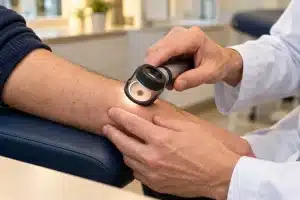
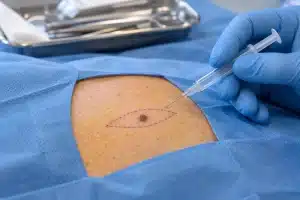
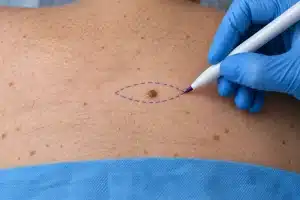
(Image – alt: “keloid scar dermatology treatment”)
Causes and risk factors
Some people are more prone to keloid scars:
- Family history of keloids.
- Dark skin or specific ethnic type.
- Scars located on certain areas of the body (sternum, shoulders, earlobes).
- Repeated skin trauma or previous surgical procedures.
Possible treatments
- Bandages or silicone sheets : reduce skin thickness and tension.
- Corticosteroid injections : reduce inflammation and scar volume.
- Medical laser : improves the color and texture of the scar.
- Corrective surgery reserved for severe cases, always associated with preventive measures to avoid recurrence.
Prevention
- Rigorous monitoring of wounds after surgery or trauma.
- Use of silicone dressings on at-risk scars.
- Consultation promptly as soon as a raised or bothersome scar appears.
FAQ about keloid scars
Is a keloid scar dangerous?
No, it is benign but can be unsightly or uncomfortable.
Can a keloid scar be prevented?
Yes, by using silicone dressings and carefully monitoring wounds at risk.
Do corticosteroid injections still work?
They are effective in most cases in reducing volume and inflammation, but several sessions may be necessary.
Is surgery the only solution?
No, it is reserved for severe cases and must be combined with preventive treatments to avoid recurrence.
How long does it take for a keloid scar to improve?
Treatment can last from several weeks to a few months depending on the size and location of the scar.
About the Author
Dr Nathaniel Stroumza-Escoffier — Plastic and aesthetic surgeon in Paris 8th arrondissement.
Former Head of Clinic at Tenon Hospital (AP-HP), Fellowships in plastic surgery in Brisbane (Australia) and Montreal (Canada). Author of scientific publications indexed on PubMed. First French surgeon trained in MIA prostheses, pioneer of Quantum radiofrequency in France.
RPPS: 10100674943 · → Discover the complete career path (publications, degrees, fellowships)

This article is for informational purposes only and does not replace a medical consultation.